Cirqle Case Study
Payment Split for Group Expenses
Project Overview
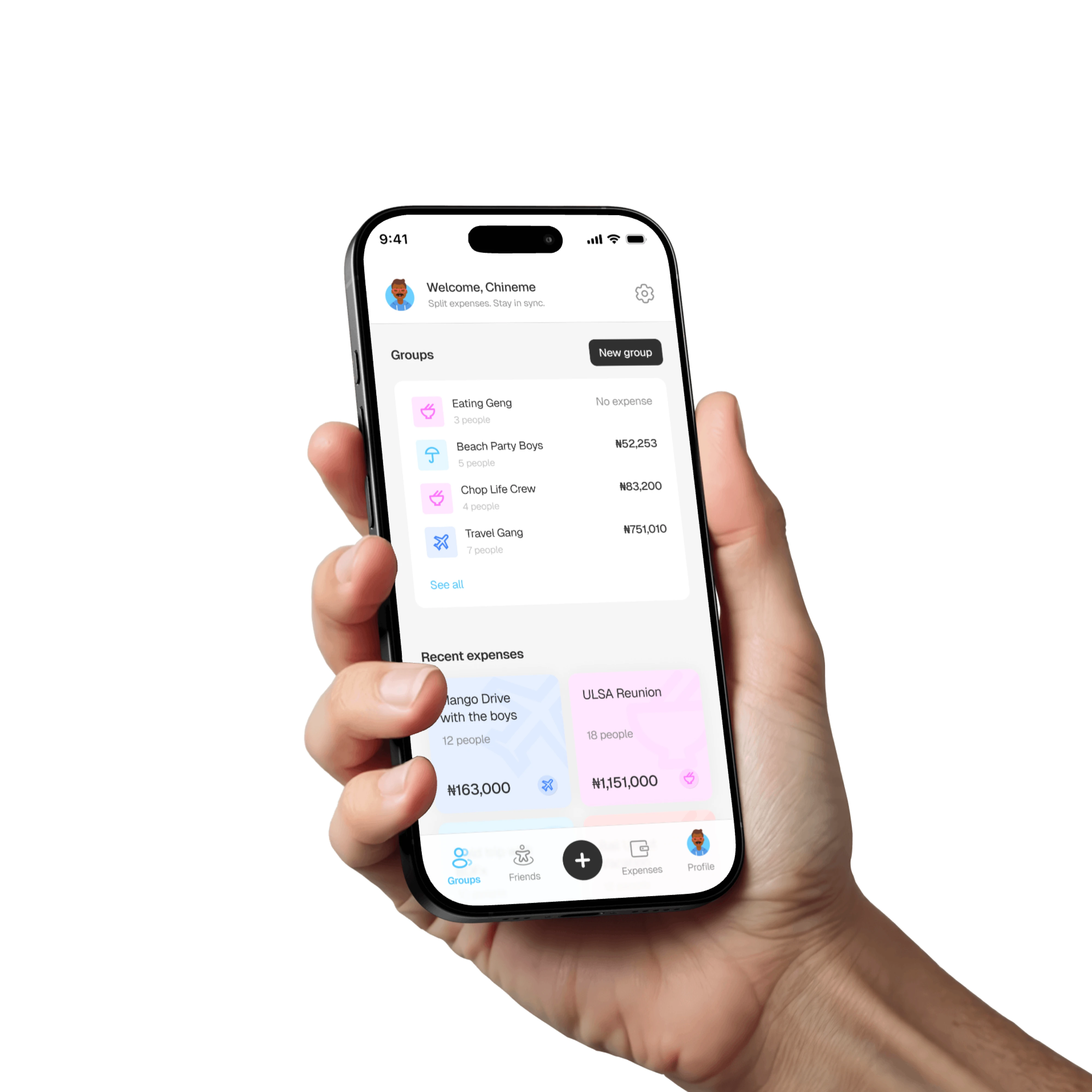
Cirqle is a mobile-first app designed to simplify shared payments for everyday group expenses in Nigeria. From rent to hangouts, many groups face tension when tracking contributions. Cirqle enables users to create groups, split expenses transparently, and settle payments through familiar local methods such as bank transfer and USSD. What makes the solution unique is its focus on cultural context: clarity, trust, and non-intrusive reminders that reduce friction in group dynamics.
Challenge & Background
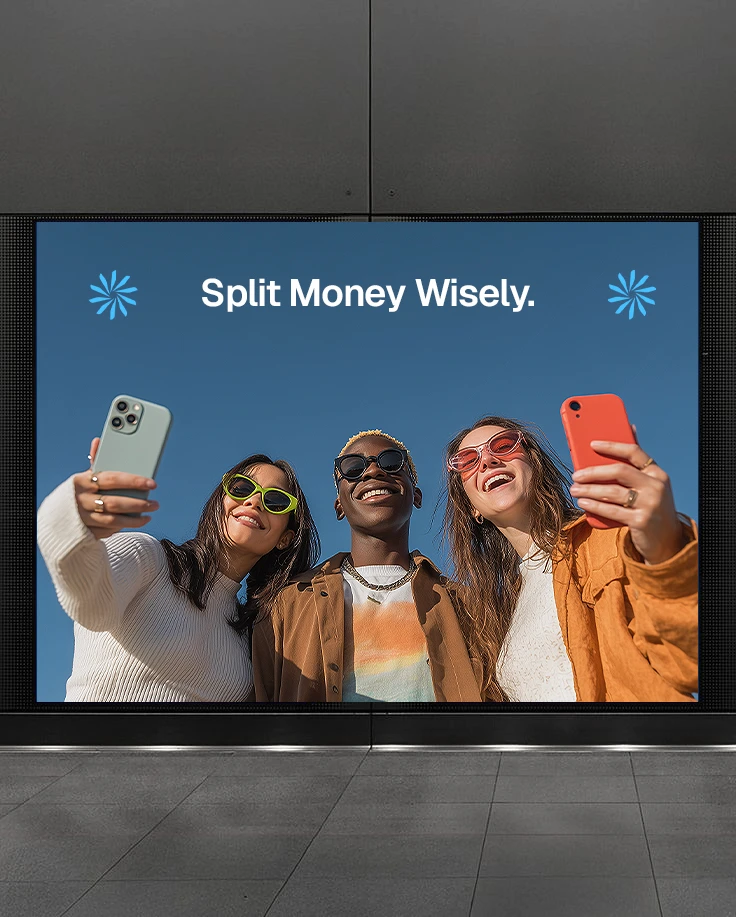
Group payments are common in Nigeria for rent, hangouts, and shared bills. Current solutions are informal, often stored in WhatsApp chats, spreadsheets, or memory, which causes confusion, unpaid debts, and damaged relationships. There is also a business opportunity to serve an underserved, frequent-user market with a lightweight, locally adapted product.
Design an app that is simple enough for nontechnical users, builds trust in financial interactions, prevents social friction from follow-ups, and integrates with local payment methods instead of assuming cards or wallet usage.
Goals & Constraints
Goals
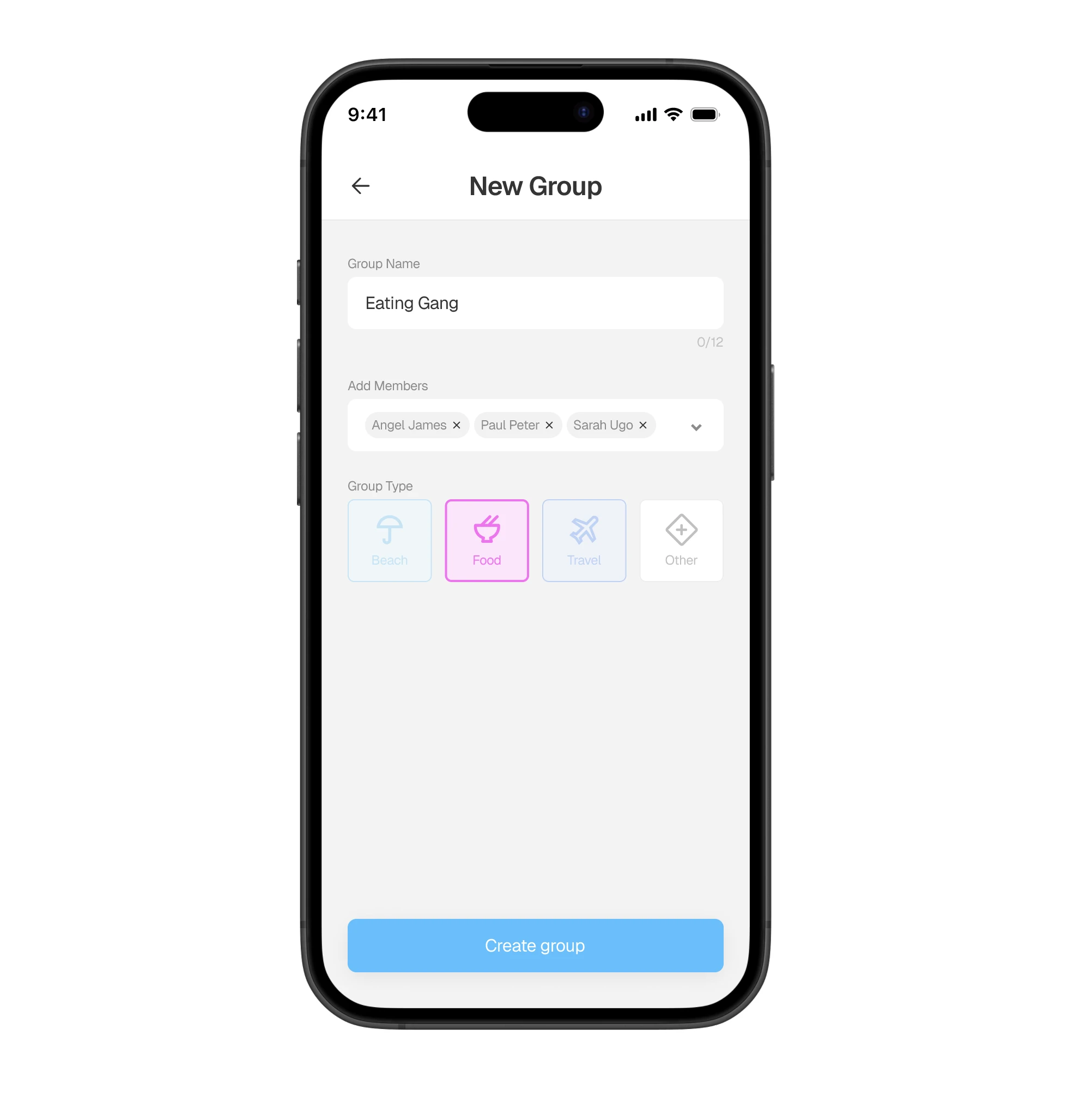
Make it effortless to create groups and split expenses.
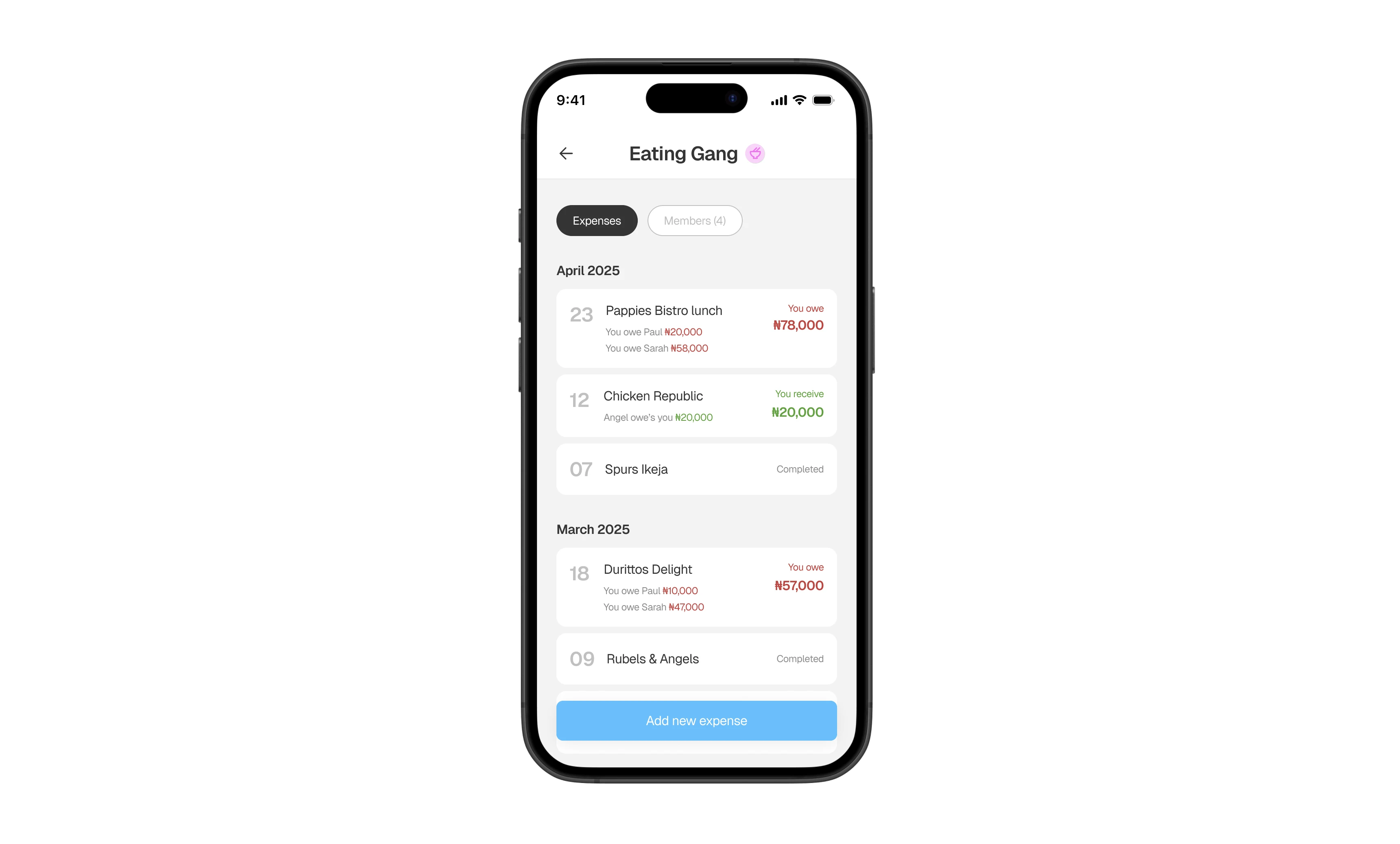
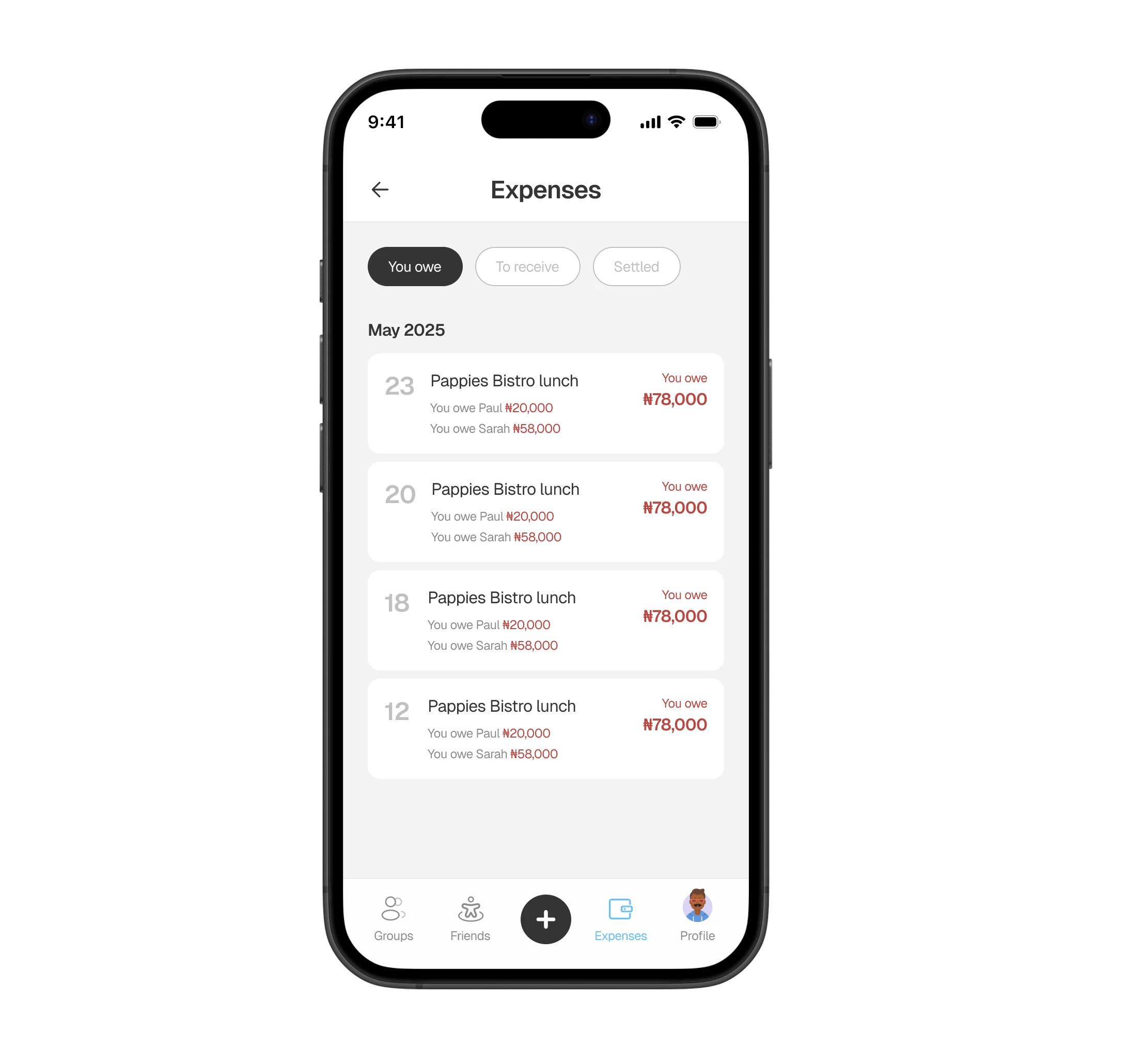
Provide instant clarity on who owes what and which expenses are settled.
Support local payment channels (bank transfer, USSD, mobile money).
Keep the experience fast, mobile-first, and low friction.

Ensure reminders are respectful and non-intrusive.
Constraints
Need a lean MVP with minimal steps for mobile users.
Local payment integrations limit reliance on third-party wallets.
Cultural sensitivity around money requires soft UX for nudges
Compromises
No in-app wallet or escrow in MVP.
Analytics and advanced reporting deferred to v2.
Voice-based reminders postponed to later releases.
Team & Role
Sole product designer: research, user flows, wireframes, UI, prototype.
Process: Research, Design, Testing
I relied on informal research and local observations to ground the design:
Observed current practices like manual lists, chats, and spreadsheets
Identified recurring pain points: confusion, unpaid debts, loss of trust
Validated that users value clarity, fast updates, and respectful reminders over advanced financial features
Key Insight: Trust and transparency are more important than complex functionality. Reminders must feel helpful, not pushy.
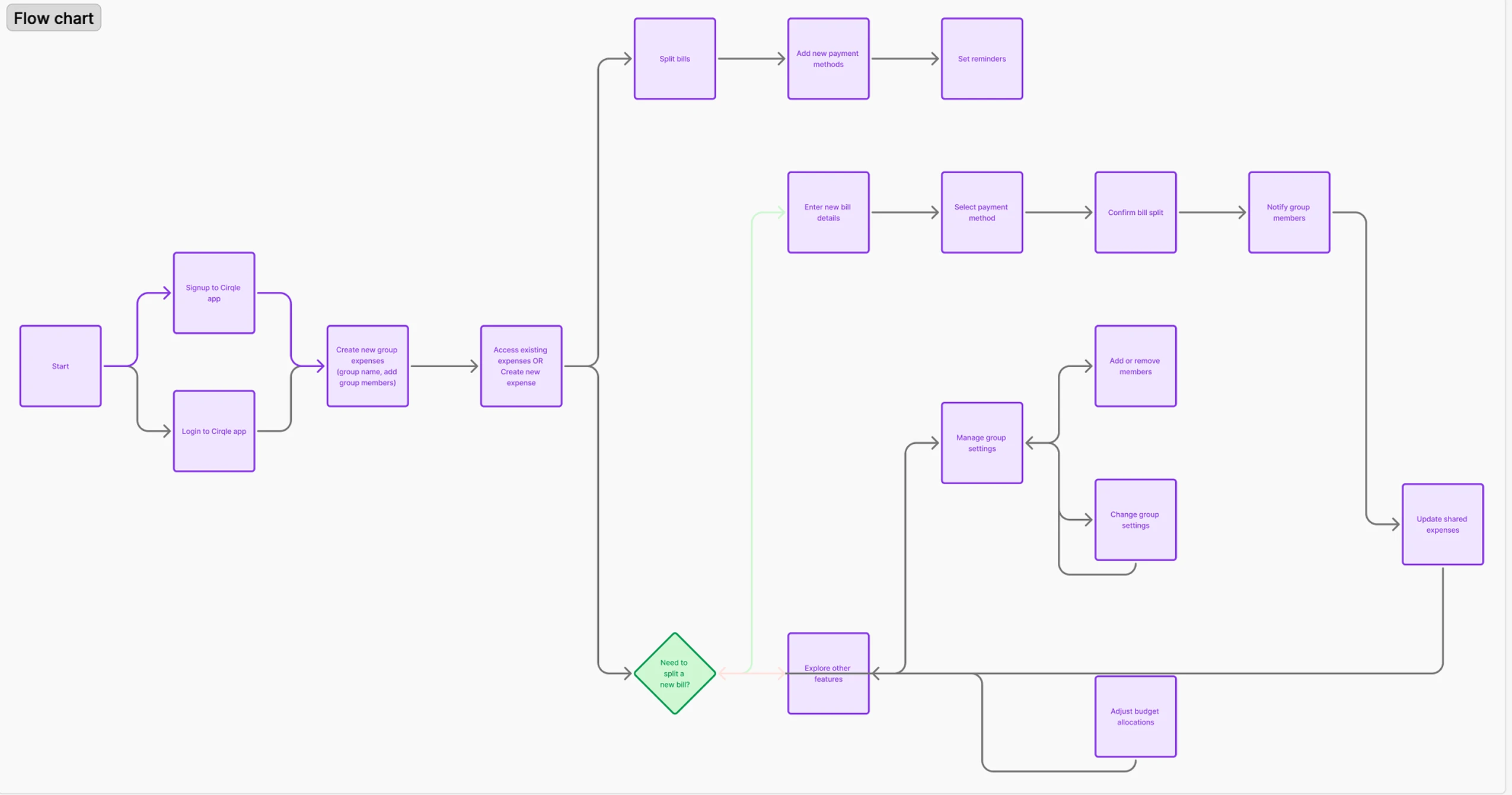
USER FLOW
Mapped user flows from signup to expense settlement.
Iterated low-fidelity wireframes for group overview, add expense, and reminders.
Built high-fidelity screens optimized for mobile with clear status indicators.
Designed copy and tone to reduce tension in money requests.
Prototype demo created from high-fidelity screens.
Handoff package includes annotated screens and interaction notes.
Next step: usability testing with target groups and local payment test cases.
MVP Features
Create and manage groups.
Add and categorize expenses.
Upload receipts for transparency.
One-tap request to group members.
Summary balances at group and user level.
Add local payment methods: bank transfer, USSD, mobile money.
Gentle reminders with rate limits.
Mobile-first login via phone or email.
Final UI Designs
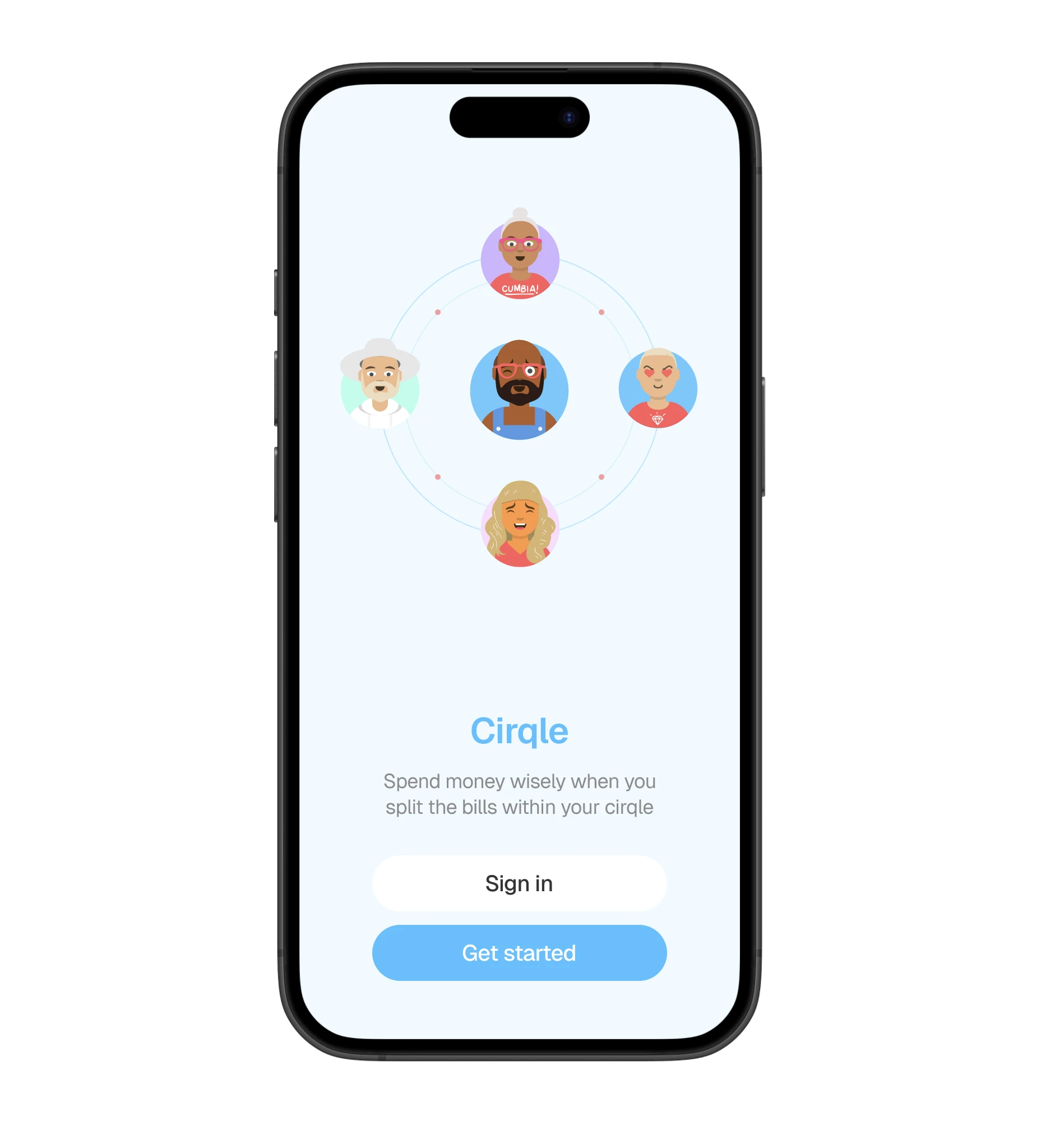
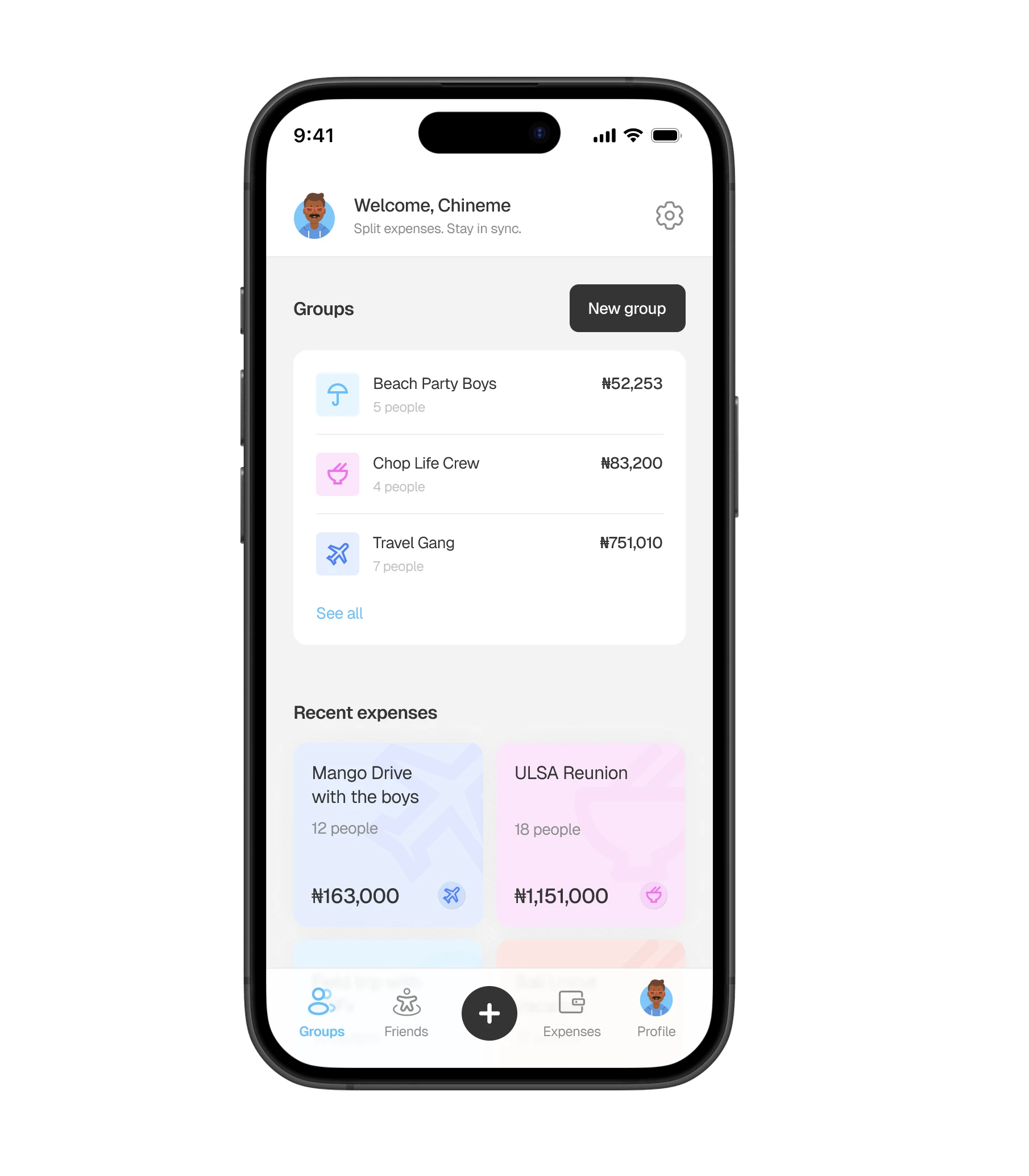
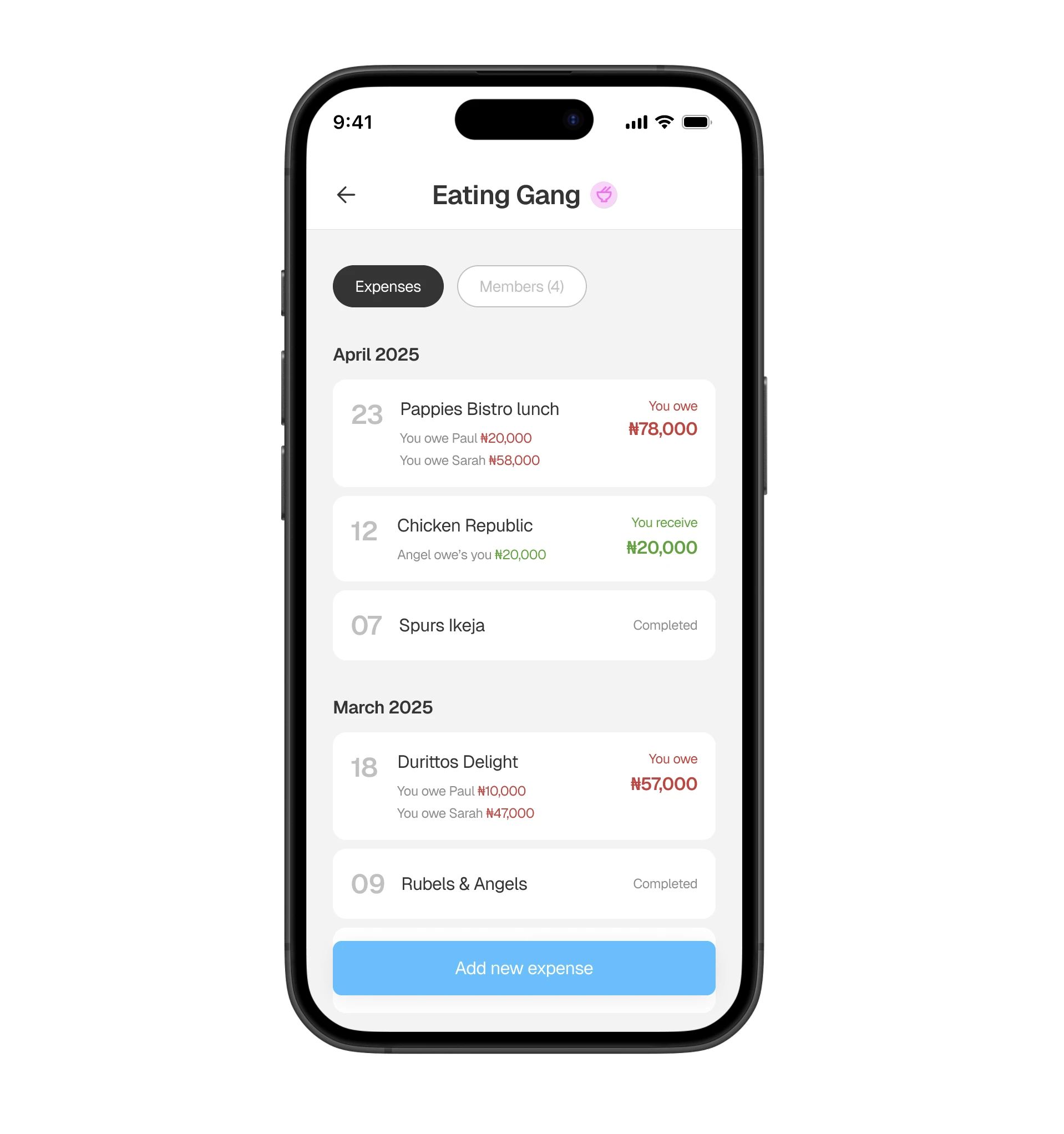
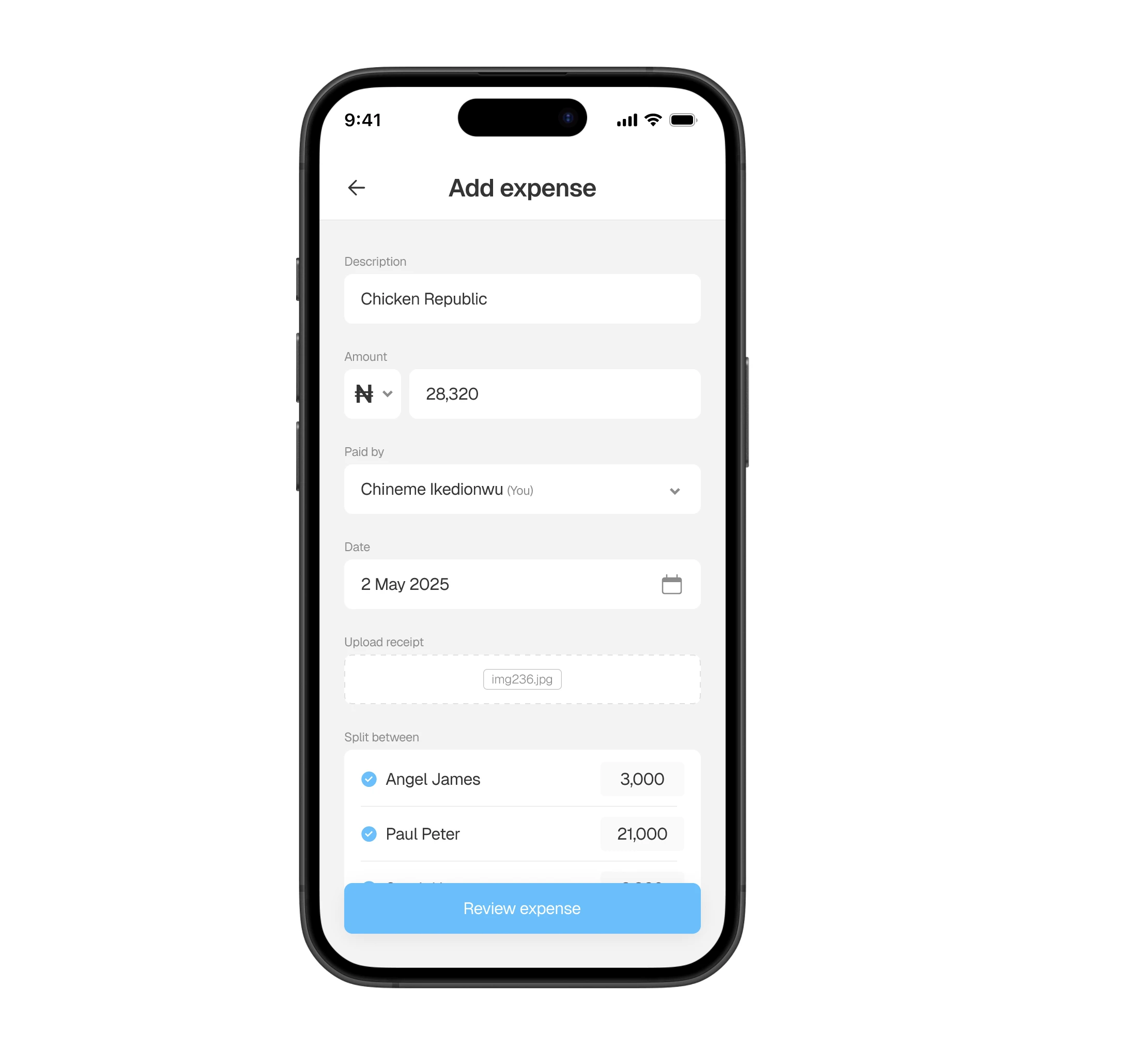
Early installs at pilot
Groups created in first month
Payments settled within 7 days
Learnings
Trust matters more than complex features. Clear receipts and status reduce disputes.
Gentle reminders with context and limits are accepted better than constant nagging.
Local payment behavior must define the integration strategy to increase adoption.
Previous project
Next project